


A few months ago I was at one of the bigger fruit and vegetable distributors in the Netherlands. The warehouse floor was impressive. Automated sorting systems, conveyor belts, the works.
Then I walked into the office.
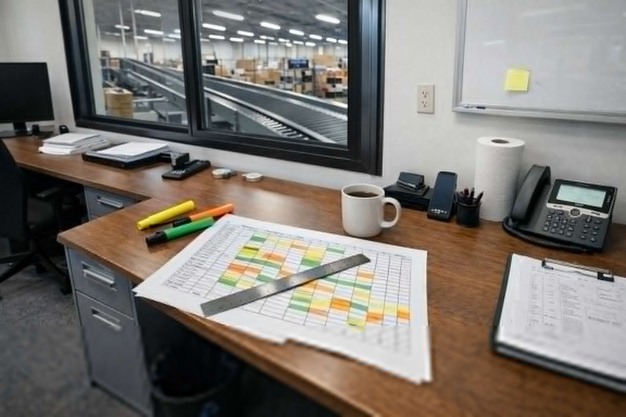
Someone had printed an Excel on A3 paper. They were going through it line by line with a ruler, colouring in the resources by hand. It was easier that way than working in the system.
They weren't doing this because they were behind. They were doing it because their way of planning doesn't fit inside the system. The logic, the exceptions, the "we always do it like this because of X" stuff. That lives in people's heads, not in software.
This is everywhere. A recent study found that 98% of manufacturers are exploring AI. Only 20% feel ready. I don't think the gap is technology. I think the gap is that the most valuable knowledge in these companies was never digitised in the first place.
ERPs store what happened. Orders, invoices, shipments. They don't store why it happened. Why that planner scheduled that line differently on Fridays. Why procurement doubles the order for that supplier in March. Why that one customer always gets handled manually.
That knowledge sits with people who've been doing this for 20 or 30 years. And slowly, those people are leaving.
The usual advice is to "get the foundations right first." Migrate the ERP. Clean the data. But most of the time that means moving from a foundation built in the 90s to one designed in the 2010s. Better, but still a system that stores records, not reasoning.
That's what we're working on at Lleverage. Not replacing systems, but capturing the decision logic that lives around them. The tribal knowledge that actually runs these companies. Turning that into something AI can learn from and act on.
Because the A3 sheet with the ruler isn't the problem. It's probably the most valuable piece of intelligence in that building. The problem is that it only exists in one person's head.
 © Lennard Kooy